
Unraveling Resilience: Amanda Peet's Journey Through Love, Loss, and Healing
- 2 hours ago
- 3 min read
Amanda Peet's Brave Embrace of Cancer and Loss: A Call for Early Detection and Community Healing
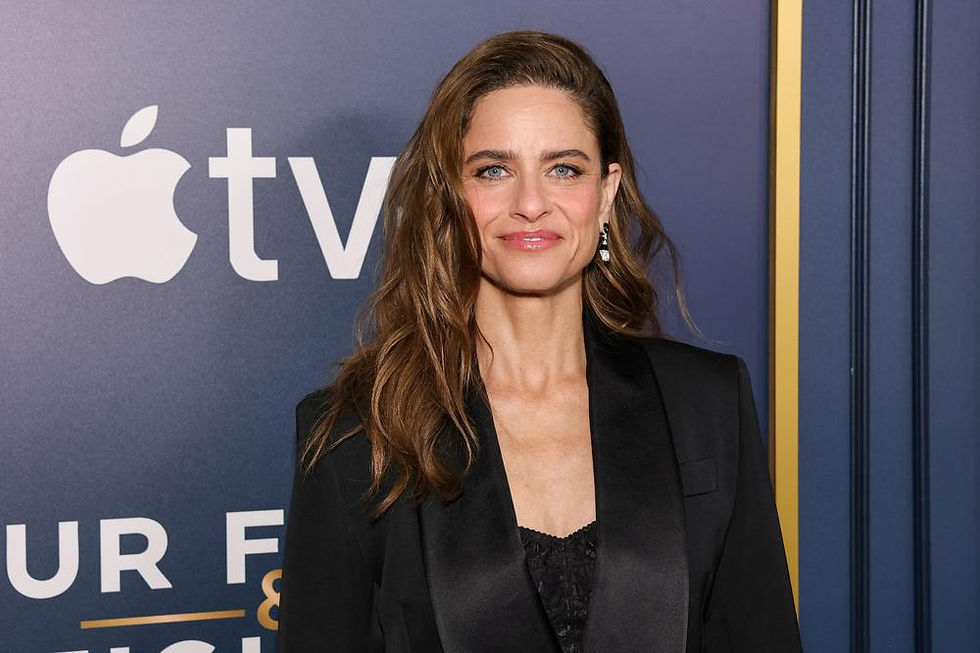
Amanda Peet, the accomplished actress known for her work in film and television, is opening up about a deeply personal chapter of her life in a poignant essay for The New Yorker. Published on March 21, the 54-year-old shares the harrowing experience of her breast cancer diagnosis in the context of losing both her parents. In an interview with USA TODAY, Peet reflected on her motivations for writing the piece, revealing, “I didn’t really have an agenda that I can point to,” suggesting that her decision to write stemmed from a need to cope and find clarity amid overwhelming circumstances.
Peet’s journey took a dramatic turn on August 29, 2025, during what she expected to be a routine scan — a regular procedure she had undergone every six months due to her “dense” and “busy” breasts. The results revealed a small tumor, news that would soon be compounded by family tragedy. Just a few days later, her father, Charles D. Peet Jr., passed away at his home in New York. Meanwhile, Peet’s mother, Penny, battled the late stages of Parkinson’s disease while living with Peet on the West Coast. As if navigating her parents’ illness and passing wasn’t enough, a subsequent MRI revealed a second tumor for Peet, though it was later found to be benign. Despite the diagnosis of Stage 1 breast cancer, Peet underwent a lumpectomy and radiation therapy, and has since received clear scans, offering a glimmer of hope amid the tumult.
The essay not only serves as an outlet for Peet's emotions but also aligns with the emerging trend of celebrities using their platforms to raise awareness about health issues. One such individual is Olivia Munn, Peet’s co-star in “Your Friends & Neighbors,” who publicly shared her own breast cancer journey in 2024. Munn, now 45, revealed her diagnosis via a heartfelt Instagram post, crediting her doctor for estimating her Breast Cancer Risk Assessment score, a calculation based on factors like family history and age. Munn’s score indicated a significant risk, leading to timely interventions that ultimately resulted in a double mastectomy.
Resonating with Peet’s experience, Munn expressed admiration for Peet’s courage to come forward with her story. “I was really moved by (Peet) coming out and talking about it,” Munn shared in her interview. Understanding the crucial role that early detection plays in battling cancer, Munn highlighted how Peet’s early-stage diagnosis exemplifies the importance of proactive health screenings. Peet's fortunate discovery of her tumor early in its development is a stark contrast to the invasive nature of Munn’s situation, which involved more extensive treatment. The conversations between the two actresses reflect a broader initiative among celebrities to share personal health experiences, thereby fostering a supportive community for those navigating similar paths.
Both Munn and Peet emphasize that sharing their experiences is not merely an act of vulnerability, but a potential lifeline for others facing similar challenges. Munn remarked, “The more women who share their story, it will always help other women.” This sentiment resonates profoundly as many individuals gear up to confront their own health crises in silence, often burdened by stigma or fear. By speaking out, Peet and Munn are not only honoring their own journeys but also encouraging communal healing among women who may feel isolated in their battles. The celebrity lens has become increasingly vital in shaping discussions around women’s health, as influential figures leverage their visibility to demystify medical diagnoses that can be shrouded in fear.
Peet’s revelation serves as an encouraging reminder about the significance of early detection and medical awareness, especially among women. As more influential women in the entertainment industry speak about their challenges, a culture of openness and sharing is encouraged. It is this culture that can empower others to prioritize their health and seek necessary medical assessments, ultimately instilling hope that their stories could inspire life-saving measures.
In conclusion, Amanda Peet’s candid reflection in her essay about her breast cancer journey, interwoven with the loss of both of her parents, is a compelling reminder of the resilience of the human spirit. As she navigated one of the most trying times in her life, she found a voice not only for herself but for others. Through her courage and vulnerability, Peet is contributing to an essential dialogue about women's health and the power of early intervention. In an age where celebrity narratives often focus on glamour and success, Peet and Munn’s stories shift the spotlight to experiences that resonate deeply, offering inspiration, solidarity, and hope to women everywhere. Their willingness to be open about their health challenges serves as a beacon for those who might feel that their own journeys are solitary, reinforcing that nobody has to face these battles alone.


Comments