
Streaming Shake-ups and Sporting Triumphs: Navigating the Future of Entertainment
From Netflix's Executive Shuffle to Streaming Sports Domination: Exploring the Dynamic Shifts in Entertainment After Major Changes

This week, the entertainment world is buzzing with major news: Netflix has parted ways with Bela Bajaria, their chief content officer. This reshuffle is significant, and while I’ll delve into the implications more extensively in my upcoming "Most Important Story of the Week," it reflects ongoing transformations within the streaming industry. Bajaria's exit signals a pivotal moment for Netflix, especially as it navigates fierce competition, evolving viewer preferences, and the complexities of content creation. While this news dominates the headlines, there’s a plethora of other exciting developments in the celebrity and entertainment sphere that merit attention.
Let’s dive into the latest streaming ratings, particularly focusing on the NFL, which continues to dominate viewership and serve up compelling stories that capture the nation. Football season is in full swing, and streaming platforms are taking some high-profile strides to secure their slice of the sports audience. NFL games have consistently proven to be powerhouses in attracting viewers, and it’s noteworthy to see how platforms such as Netflix and Prime Video are stepping up their game. Netflix recently secured the rights to stream the NFL’s opening game, bringing in an impressive average of 18.5 million viewers. While it notably trails behind traditional platforms like NBC and Peacock, which averaged 25.1 million viewers for their opening game, Netflix's entrance into this space signifies a larger trend towards streaming adoption among sports fans.

The numbers tell an interesting story. While traditional television still outperforms streaming in terms of reach, the viewership figures for Netflix and Prime Video illustrate that viewers are beginning to embrace streaming options for live sports. Prime Video's Thursday Night Football has also made significant gains, reaching a record high of 18.6 million viewers in its opening week. Despite the traditional broadcasters still leading the pack, the consistency and upward trajectory of streaming viewership indicate that audiences are warming up to these platforms for major live events. This trend is crucial, especially as we consider how certain content, like adult animated shows and award telecasts, are faring on streaming services.
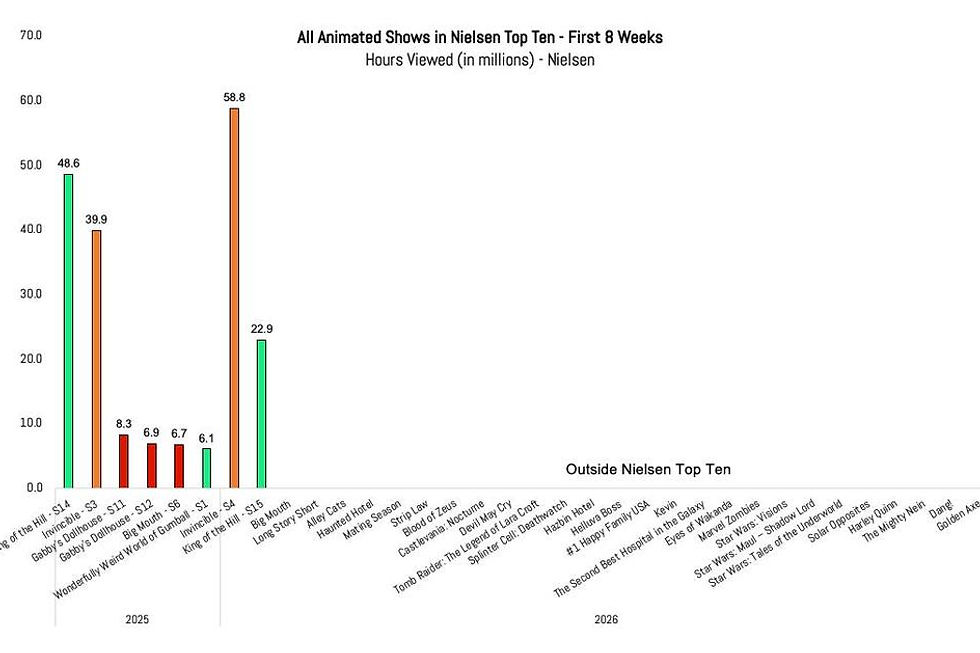
That said, not every show is a hit. In the realm of adult animated programming, Netflix’s recent releases, "Dang!" and Paramount+'s "Golden Axe," did not achieve the expected viewership, failing to make the charts. This isn’t an isolated incident; many animated shows across various platforms have struggled, including prominent titles like "Big Mouth" and "Blood of Zeus." Streaming services may have found a level of comfort in producing animated content due to lower production costs, but as evidenced by low viewership numbers, it's becoming increasingly clear that the appeal isn’t translating to robust audience engagement. Compared to classic animated sitcoms that thrive in syndication, new entries face a harsher reality, struggling to find their footing in a market saturated with content.

And then, there's the annual Emmy Awards, which also shed light on the current state of television and streaming. This year's ceremony featured a mix of nominees with strong showing on various platforms; however, the broadcast itself has faced scrutiny regarding its future. With more viewers leaning towards streaming platforms and award shows failing to captivate audiences as they once did, critical discussions arise about how these prestigious ceremonies will adapt. Data from the Emmys indicates that nominees have successfully navigated the streaming realm, but the low viewership for the award show broadcasts raises questions about how the industry can reinvigorate interest and viewership.
As we look ahead, the entertainment landscape is ripe with compelling projects and returning favorites. Netflix is gearing up for the return of "The Great British Baking Show," while other platforms, like Apple TV, are introducing star-studded comedies that are generating buzz. Major films like "Toy Story 5" and new adaptations such as "East of Eden" are also making their way to streaming, promising to keep fans entertained. The Kardashian clan is back with their series on Hulu, and a reboot of Carrie is set to attract additional eyes to Prime Video.
Amidst this, the industry is shifting its production strategies, as evidenced by HBO Max ordering a promising new series starring Kaley Cuoco with a substantial episode count. This suggests a shift toward longer-running shows, perhaps in response to viewer demand for more in-depth storytelling. However, not all projects are moving smoothly; there are reports indicating potential delays in other productions, like "Landman," which has garnered a loyal following. These fluctuations signal a competitive but evolving landscape where both creators and viewers are actively shaping the future of television content.
In summary, the celebrity and entertainment world is in a state of transformation marked by high-profile exits, record viewership figures, and the ongoing struggle between streaming and traditional broadcasting. As we continue to celebrate major sporting events and anticipate exciting new projects, the industry will undoubtedly adapt, responding to viewers' demands and changing habits. From animated shows finding their footing to award ceremonies reevaluating their formats, the future of entertainment promises to be dynamic and engaging. As new stars and stories emerge, audiences remain at the heart of this ever-evolving narrative, shaping the next chapter in the world of television and film.


Comments