
Starlit Divides: The Dance of Celebrity Influence in America's Political Landscape
- israelantonionotic
- 1 hour ago
- 3 min read
Star Power Showdown: The Battle of Celebrity Activism Between Left and Right in Today's Political Arena
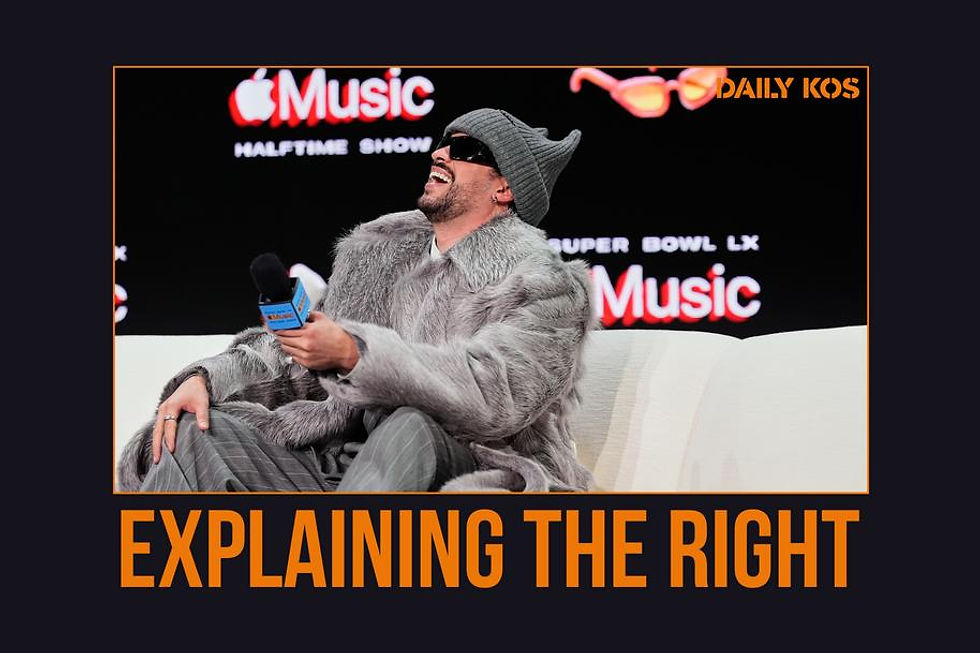
In the dynamic world of celebrity culture, political alignments play a significant role in shaping public perceptions and influence. Recently, the right-wing advocacy group Turning Point USA revealed a lineup for an “alternative” Super Bowl halftime show intended to divert attention from the official event headlined by Bad Bunny, the Puerto Rican superstar and Spotify’s top artist for 2025. While Bad Bunny represents a contemporary voice with nearly 20 billion streams, the alternative show is headlined by Kid Rock, whose last top 10 single was over two decades ago, accompanied by lesser-known artists such as Brantley Gilbert and Gabby Barrett. This stark contrast highlights the challenges conservative figures face in attracting current celebrity talent.
The disparity in celebrity support for political factions becomes even clearer when examining high-profile figures backing the GOP. Former Superman actor Dean Cain has advocated for ICE, while Gina Carano faced backlash from Disney for incendiary remarks that many likened to Holocaust comparisons. Jon Voight, another actor with an Oscar on his shelf, has dedicated years to promoting conspiracy theories and expressing unwavering support for Donald Trump. Occasionally, more widely recognized figures, such as rapper Nicki Minaj, step into the political ring; however, her associations with controversial figures complicate the narrative of her support for conservative values.
In stark contrast, the world of celebrity activism thrives among those who support Democratic ideals and liberal causes. Iconic artists like Bruce Springsteen and Taylor Swift have recently made headlines, with Springsteen releasing music to support anti-ICE protests, while Swift openly endorsed Kamala Harris for the 2024 presidential election. These figures are part of a much larger network of celebrities, including Beyoncé and Lady Gaga, who actively participate in political activism and support candidates that reflect their values. Oprah Winfrey's backing of Barack Obama in 2008 and the powerful endorsement from Morgan Freeman during Obama’s reelection campaign further cement the belief that the creative arts are intertwined with political expression.
The events of 2016 showcase the contrast between celebrity presence at political events, with Trump’s Republican National Convention featuring stars like Antonio Sabato Jr., while the Democratic National Convention hosted an array of renowned figures such as Meryl Streep, Katy Perry, and Kareem Abdul-Jabbar. This dichotomy exemplifies how the conservative movement's longstanding grievances against Hollywood stem from a perceived monopoly of left-leaning values. Pundits like Tomi Lahren have criticized award shows for their political commentary, equating it to a decline in viewership. Yet, the response from artists like Don Cheadle highlights a fundamental inconsistency in this critique, questioning how such events could remain popular if they are indeed "trash."
Creativity inevitably thrives on diversity, fostering environments that reflect a multiplicity of perspectives—something often at odds with conservative ideologies. The crux of the issue lies in the right-wing's confrontational stance towards the arts while simultaneously yearning for acceptance within the creative community. Political alignment does not erase the intrinsic nature of artists and entertainers. Regardless of election outcomes or shifts in political landscapes, creative individuals remain ambassadors of their beliefs, often utilizing their platforms to advocate for social change.
The frustration felt by conservatives over their inability to capture the same star power enjoyed by liberals speaks volumes about their broader political strategy. As they seek to build an alternative culture and event spaces—like Turning Point USA’s halftime show featuring veterans of previous decades—they struggle to attract current, influential celebrities. The reliance on artists with dwindling mainstream appeal reflects a deeper issue of identity for conservative movements within the celebrity sphere.
As the world watches, the ongoing tug-of-war between affiliations and artistic expression highlights how intertwined these elements truly are. With each passing event, from award shows to political conventions, the playing field remains starkly divided. The allure of stardom, celebrity influence, and the overwhelming resonance of progressive ideals continue to overshadow conservative ambitions, leaving many to wonder if the right can ever compete in the celebrity game effectively.
In conclusion, the complexities of celebrity endorsement within political domains reveal a landscape marked by stark contrasts. While left-leaning celebrities thrive in visibility and activism, the right struggles to find relatable voices capable of making a significant impact. The desire for recognition and relevance in the entertainment industry reflects deeper challenges faced by conservatives. Ultimately, the creative arts will continue to battle conventions as they serve not only as a form of entertainment but also as a powerful platform for political expression and social advocacy in a world that is, by its very nature, resistant to simplistic ideologies. The ongoing evolution of celebrity influence will remain a riveting aspect of political discourse, shaping future generations as they navigate their roles within this vibrant tapestry of culture and activism.

Comments