
Behind the Glamour: Unmasking the Rise of Celebrity Deepfake Scams
- Apr 30
- 4 min read
Unmasking the Illusions: How AI Deepfakes Are Hijacking Celebrity Endorsements to Lure Innocent Fans Into Scams

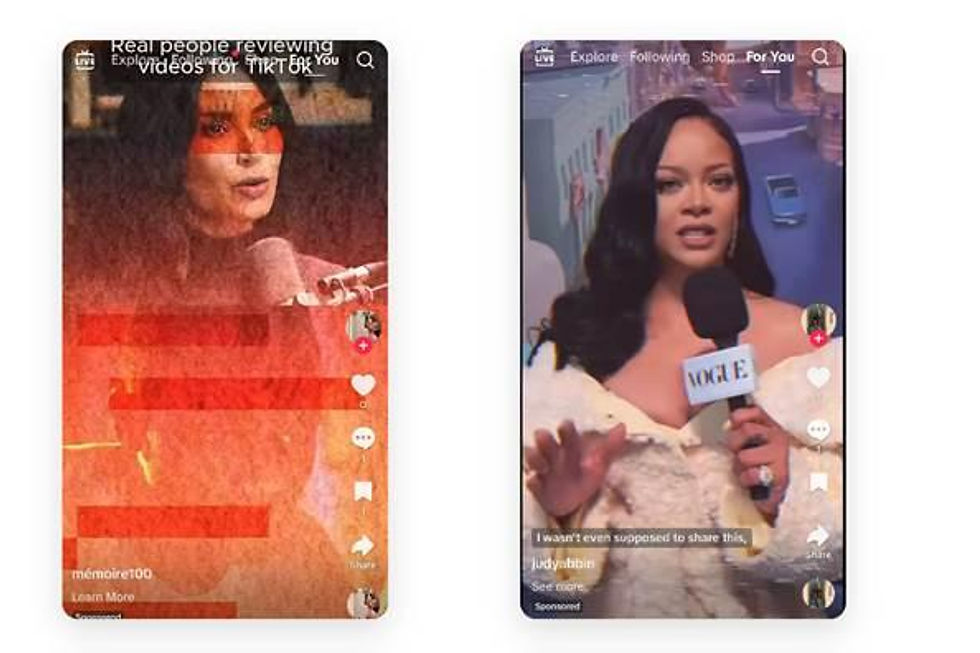
In an alarming revelation for the celebrity and digital landscape, a recent investigation by AI detection company Copyleaks has uncovered a disturbing trend: the rise of TikTok ads using AI-generated deepfakes of famous personalities to promote scams. These deepfakes are not mere hoaxes; scammers are expertly manipulating actual interviews and public footage, crafting misleading endorsements that can easily deceive unsuspecting users. The report highlights how these fraudulent ads are frequently positioned as legitimate money-making opportunities, luring users with promises of easy rewards through programs like a fictitious “TikTok Pay.”
As the investigation exposes, this underhanded tactic is gaining traction across social media platforms. In particular, users have reported seeing videos that showcase fake endorsements from iconic figures like Rihanna and Taylor Swift. One deepfake has “Rihanna” claiming that people can simply watch content and provide their opinions for rewards, while another features a fabricated “Taylor Swift” promoting an alleged “TikTok Pay” feature. The convincing nature of these deepfakes is enhanced by their use of recognizable TikTok branding, making it increasingly difficult for users to discern genuine content from these well-crafted scams. The sheer sophistication of these deepfakes poses a significant risk, especially as they redirect users to third-party websites designed to harvest personal information under the guise of legitimate offers.

Scammers have clearly taken their tactics up a notch, manipulating familiar settings where celebrities typically engage with their fans. Many of these ads reportedly feature footage of the stars during red carpet events or talk shows, further lending credence to the authenticity of the videos. However, the ulterior motive shines through—once users click on these seemingly benign ads, they find themselves navigating to websites loaded with questionable branding and prompts to enter personal data. This tactic has proved to be effective, as many users may overlook signs of manipulation in pursuit of easy financial gain. As the scheme unfolds, the celebrities themselves become unwitting participants, their images being used to perpetrate fraud.
While this TikTok investigation highlights a new wave of deepfake scams, it is crucial to recognize that the use of such technology for fraudulent purposes is not an isolated incident. Previous research by cybersecurity experts, such as Bitdefender, has documented similar occurrences where deepfakes were used on various platforms to promote bogus health cures and fake investment opportunities. Their findings reveal an alarming trend in which fraudsters take advantage of this emerging technology to create highly convincing impersonations that can easily dupe users into falling for elaborate scams. From unauthorized impersonations of celebrities endorsing investment schemes to fake health endorsements promising miracle cures, the potential for misuse of deepfake technology in the realm of scams is vast.
For the everyday user, identifying these sophisticated scams requires a keen eye and a healthy dose of skepticism. Experts recommend several strategies for discerning whether a video or advertisement is too good to be true. Attention to detail is critical; observing the movement of the eyes, the symmetry of facial features, and even the angles of hand gestures can reveal inconsistencies characteristic of deepfake technology. Additionally, users should pay close attention to the audio—if a voice sounds robotic, flat, or out of sync with lip movements, it could indicate manipulation. Background inconsistencies or unnatural flickering can also serve as red flags, underscoring the importance of critical thinking when confronted with astonishing claims made by celebrities in videos.
When encountering a suspicious ad featuring a celebrity promoting an unbelievable offer—particularly those urging users to click away from the platform—it’s crucial to step back and verify the claims. Checking official social media accounts, recent interviews, or reputable news sources is a smart move to ensure that the endorsement is authentic. It’s easy to question the legitimacy of any claim made by a celebrity in these ads—after all, what A-lister is likely to reach out randomly on social media with an alluring offer? For those still uncertain, technology offers solutions. Tools like Bitdefender Scamio can provide quick analysis of suspicious messages, links, or images. This AI-powered assistant helps protect users by assessing potential scams, giving a second opinion that could save someone from falling victim to deception.

In the ever-evolving landscape of social media and celebrity culture, the line between genuine promotion and manipulation is becoming increasingly blurred. As deepfake technology advances, the necessity for awareness and caution among users intensifies. While the allure of celebrity endorsements can be powerful, individuals must be vigilant, discerning what is real and what is fabricated. The appropriation of celebrity personas for deceitful ends exemplifies the darker side of technological advancements, emphasizing the need for continued dialogue around ethics, digital security, and consumer awareness in the celebrity-studded world of today.
As we navigate this complex digital terrain, it becomes clear that education and awareness are the best defenses against falling victim to these scams. Engaging critically with content, seeking verification, and using technological tools to double-check potential risks can empower fans to enjoy their favorite celebrities while safeguarding their personal information. The aim should not only be to marvel at the glitz and glamour of the celebrity world but to also remain vigilant in protecting oneself against the shadows that lurk within it. Celebrities may wield influence, but it is the responsibility of individuals to ensure that this power is not misused against them.


Comments